

July - Episode 2

Welcome to my second batch of articles for July which include:
· Pot Pourri
· a look at fennel – and a recipe
· some more jobs to be getting on with
· a just-for-fun quiz
Pot pourri
It’s a shame that nowadays the term pot pourri often conjures up visions of dried out bits of non-descript, bark-like substances collecting dust in a bowl that some well-meaning friend gave you for your birthday about five years ago. Either that, or a bag of equally non-descript wood shavings, leaves and other ‘botanicals’ that the packet says will remind us of fluffy towels or Christmas cookies or will instantly transport us to a tropical paradise filled with the scent of vanilla, mango and ginger – all at once!
Harking back to days gone by isn’t always a good idea but I think when it comes to potpourri, it is worth more than a backward glance. Flowers have long been used to scent the home, but it was during the eighteenth century that the potpourri came into its own. The term pot pourri was originally a culinary term roughly meaning a pot of mixed vegetables (literally ‘rotten’ or ‘addled’ pot, from the French for ‘rotten’: pourri, à la pourriture), but it was somehow hijacked and came to mean a pot of mixed fragrant flowers, herbs and spices – far from rotten! Bowls of pot pourri would be strategically placed around the home to fragrance the air – there were no artificial room sprays back then!
Unlike the modern, mixtures, a traditional pot pourri always contains roses, with whatever other flowers, petals, leaves and spices are available or desired – no artificially dyed pieces of wood shavings, please! A fixative is required, too, to prolong the fragrance: orris root powder, from Iris germanica var. florentina, is still widely used. And if you want a more intense scent, you can add a few drops of an essential oil.
How to Make Pot Pourri
Now, brace yourself. I’m going to mention the C word. Christmas! Why? Well, now is a really good time to gather, make and squirrel away some jars of home-made pot pourri to give as presents.
There are actually two types of pot pourri – dry and wet – but I’m going to give you the recipe for the easiest one to make, the dry one.
You will need:
2 to 3 teaspoons of your chosen spice/s
25g of powdered Iris germanica var. florentina (orris) root (readily available online)
6 drops of essential oil (optional)
1 litre in total of fragrant petals of your choice – this can be one variety or a mixture
25g fragrant herb leaves
1 teaspoon of additional ingredients, such as cloves, grated orange rind or star anise (optional)
To make the pot pourri, mix together the spices, orris root and essential oil. If you use essential oil, rub the mixture between your fingers and thumb to make sure the oil is evenly distributed.
In a separate bowl, mix together the rest of the ingredients. Add the spice mixture to the bowl and mix thoroughly. Put the mixture into an airtight container and store in a dark place for at least five weeks. Shake the container occasionally to redistribute the ingredients. After the ‘maturing’ time, put the pot pourri in a decorative bowl, or use it to fill bags.
And there you have it – a lovely, home-made present.
Pot Pourri as Fly Repellent
I spent many years living in the country with a scarecrow in the garden, skylarks singing overhead, livery stables down the road, and beautiful Jersey cows munching their way through the meadow a stone’s throw away. The perfect pastoral idyll? You would think so, yes. Except that where there are animals, there are flies. This is an inevitable and inescapable fact. Now, you can spray the disease-ridden bugs with a chemical concoction which, I have to say, is very effective but not exactly environmentally friendly. You can put up sticky fly papers in the hope that they will fling themselves against it and commit kamikaze. You can line up a windowsill full of Venus Fly Traps and watch with malevolent glee as the creatures are slowly digested. During the summer holidays a friend of mine armed her two children with fly swats and paid them a penny for each dead fly – it certainly kept them busy and reduced the fly population at the same time!
And then I hit on the idea of a fly-repelling pot pourri which you could place at strategic positions around the house. The herbs won’t kill them of course, but it might just make them buzz off. After a bit of research, I discovered that Galium odoratum (sweet woodruff - top left) Lavandula angustifolia (lavender - top middle), Mentha spicata (mint - top right), Ocimum basilicum (basil - bottom left) Salvia rosmarinus (rosemary), Ruta graveoloens (rue - bottom middle) and Tanacetum vulgare (tansy - bottom right), among others, are all natural fly deterrents. Make up a pot pourri, as above, using these herbs.


Let’s have a look now at fennel as we …
Remember Funchal
It’s amazing the sort of snippets of information you pick up along the long and winding road of horticultural life. No, I’m not going all philosophical on you, and I’m also not going to give you a list of things that, once I’ve told you, you’ll wish I hadn’t! The only piece of, arguably useless, information I would like to share with you now is to do with fennel.
When I visited Madeira for the first time a few years ago, I went on the obligatory ‘round the island’ trip, starting and finishing in Funchal, the island capital. The first thing I learned about that fascinating island is that Funchal was so named because of the abundance of wild fennel growing in the vicinity. Apparently, the Portuguese for fennel is funcho; take the o away and add –al and we have ‘a plantation of fennel’.
Now you may wonder what this has to do with growing fennel here in the UK. The point I want to make is that, as with just about every other type of plant, if you can replicate the conditions, in both soil and climate that it has in its ‘wild’ surroundings, then the chances are that your attempts at growing it will be successful. So, if you can provide your fennel with Madeira-type conditions during our domestic growing season then your crop will not only survive, it will, hopefully, thrive.
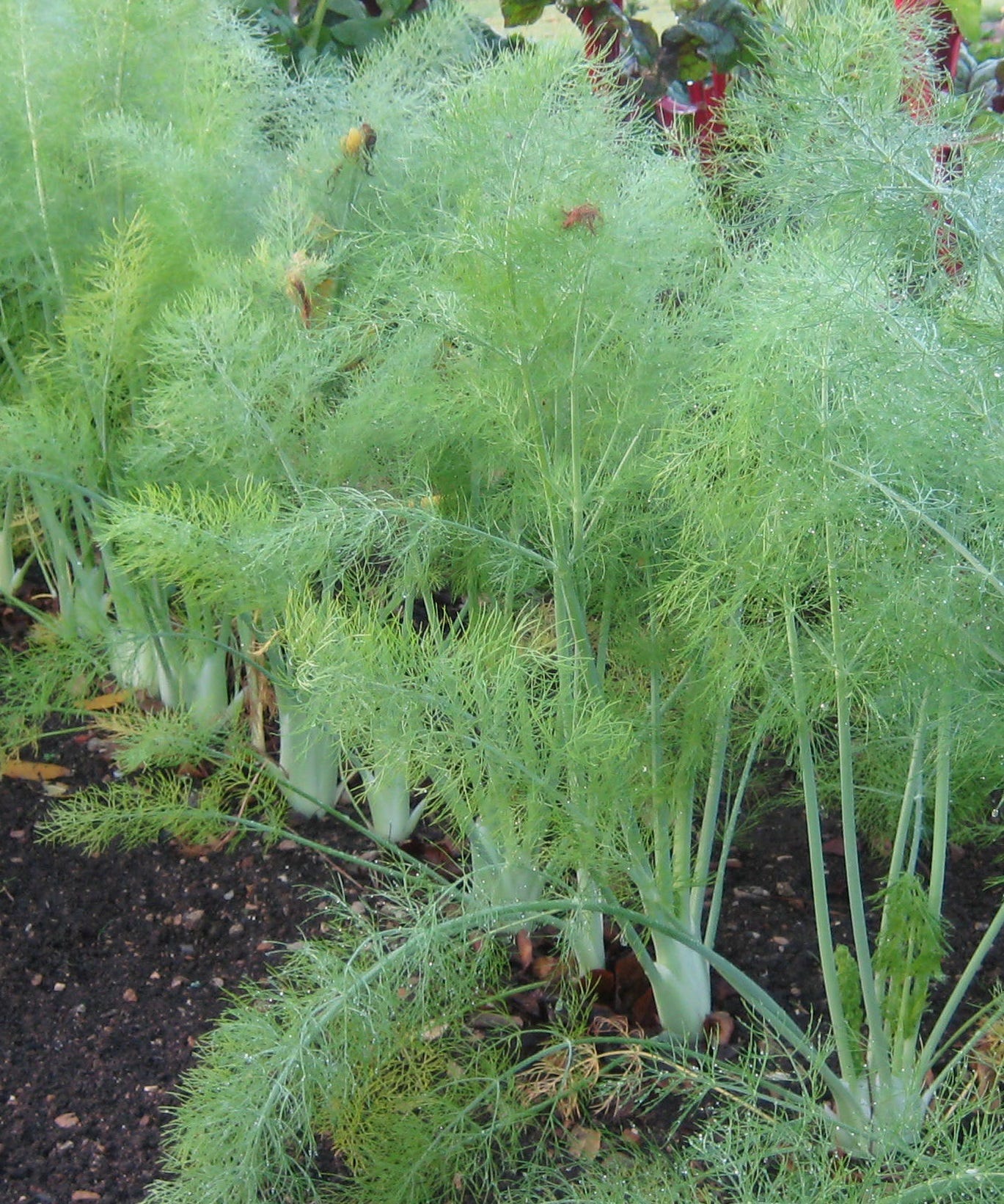
In a nutshell, fennel needs evenly moist, but not waterlogged, rich, fertile soil and warmth – just like in Madeira. This applies to both types of fennel that we are familiar with in the UK: the herb fennel, Foeniculum vulgare, and the vegetable that is known as Florence fennel, Foeniculum vulgare var. dulce. It’s the latter that I’m focussing on here.
Florence fennel is grown for its swollen, bulb-like, leaf bases. This variation came about by selecting and re-selecting species fennel so that eventually a bigger, tastier ‘bulb’ developed. Florence fennel has been grown and eaten in Mediterranean countries, and especially Italy (hence the ‘Florence’ bit) for centuries. In England we have known about this type of fennel for about two hundred years, and during that time it has never really caught on. Perhaps this is because of its strong aniseed flavour which many loathe, but others love.
Fennel can be a bit of a diva in the veg plot. If things aren’t exactly to its liking it will throw a tantrum, turn its nose up and swiftly run to seed. Apart from summer warmth, which, alas, we gardeners have little control over, it is as well to try to provide it with the other conditions it enjoys most; that way it will be happy. As I said earlier, fennel needs soil which is fertile, moisture retentive but not too soggy. It also requires uniform moisture, so you should never allow the soil to dry out: if lack of rain threatens, make sure your fennel is at the top of your watering list.
Fennel won’t tolerate root disturbance either. See what I mean about being a prima ballerina? The best way to ensure as little root disturbance as possible when growing your fennel plants is to sow the seed in individual modules and to plant them out as soon as the roots fill the container, hardening them off before you do so. Timing is of the utmost importance here. There is no point sowing the seeds too early, because you won’t be able to plant them out until all danger of frost has gone and the soil has had a chance to warm up a bit.
Fennel is also quite sensitive to day length, as reflected in light levels. I speak from experience: more than one early sowing has bolted and flowered prematurely (see picture) because I’ve ‘jumped the gun’, as it were. If your fennel does bolt and starts flowering, there is no point in trying to salvage it: the stems will always be tough. If you are feeling in a generous mood at the time, though, you can leave a couple of flowering plants for beneficial insects: fennel flowers provide excellent sustenance for a number of pollinators.
Alternatively, you can sow your fennel seeds outdoors, from May onwards, depending on the weather. I have found the best way to do this is to ‘station’ sow, sowing three seeds together, about 1.5mm deep, at 30cm intervals and then thinning each ‘station’ to leave the strongest seedling. You should make sure that you space your rows about 30cm apart.
Keep the growing plants well watered and fed – a high potassium fertiliser applied every fortnight is beneficial, as is a good mulch to conserve moisture. As the bulbs start to swell, earth them up carefully to exclude the light, taking care not to displace them. This way you will ensure that the bulb blanches to a creamy white. This practice will also keep the plant stable if the wind gets up. The bulbs are ready to harvest when they are about 7-10cm across. Cut them off with a sharp knife at ground level and you will find that the plant will re-sprout and throw up some feathery shoots that you can use as you would the herb fennel.
Fennel is relatively disease-resistant and largely pest-free. The only trouble you may have is from our perennial nuisance, the slug. If nothing else is on offer they may have a bit of a munch on the young shoots; so be vigilant and deal with the slimy little monsters as you deem necessary.
As far as varieties of Florence fennel go, there are a number that are worth trying. The first two I suggest here have received the Royal Horticultural Society Award of Garden Merit (AGM), so you can be certain that they are up to scratch. The last two are also worth a try. ‘Amigo’ produces uniform, slightly flattened, bulbs and is resistant to bolting. (Be aware, however, that just because it is resistant to bolting, it doesn’t mean it won’t bolt at all: you still have to give it as near optimal conditions as you can.) ‘Heracles’ is a fast-maturing variety with good sized bulbs. ‘Perfection’ is resistant to bolting and can be sown early. ‘Victorio’ has uniform bulbs with a tinge of green.
If you’re wondering what to do with your Florence fennel after you’ve taken the trouble to grow them here are a few suggestions.
You can simply slice some very thin shavings and add them, raw, to a mixed salad.
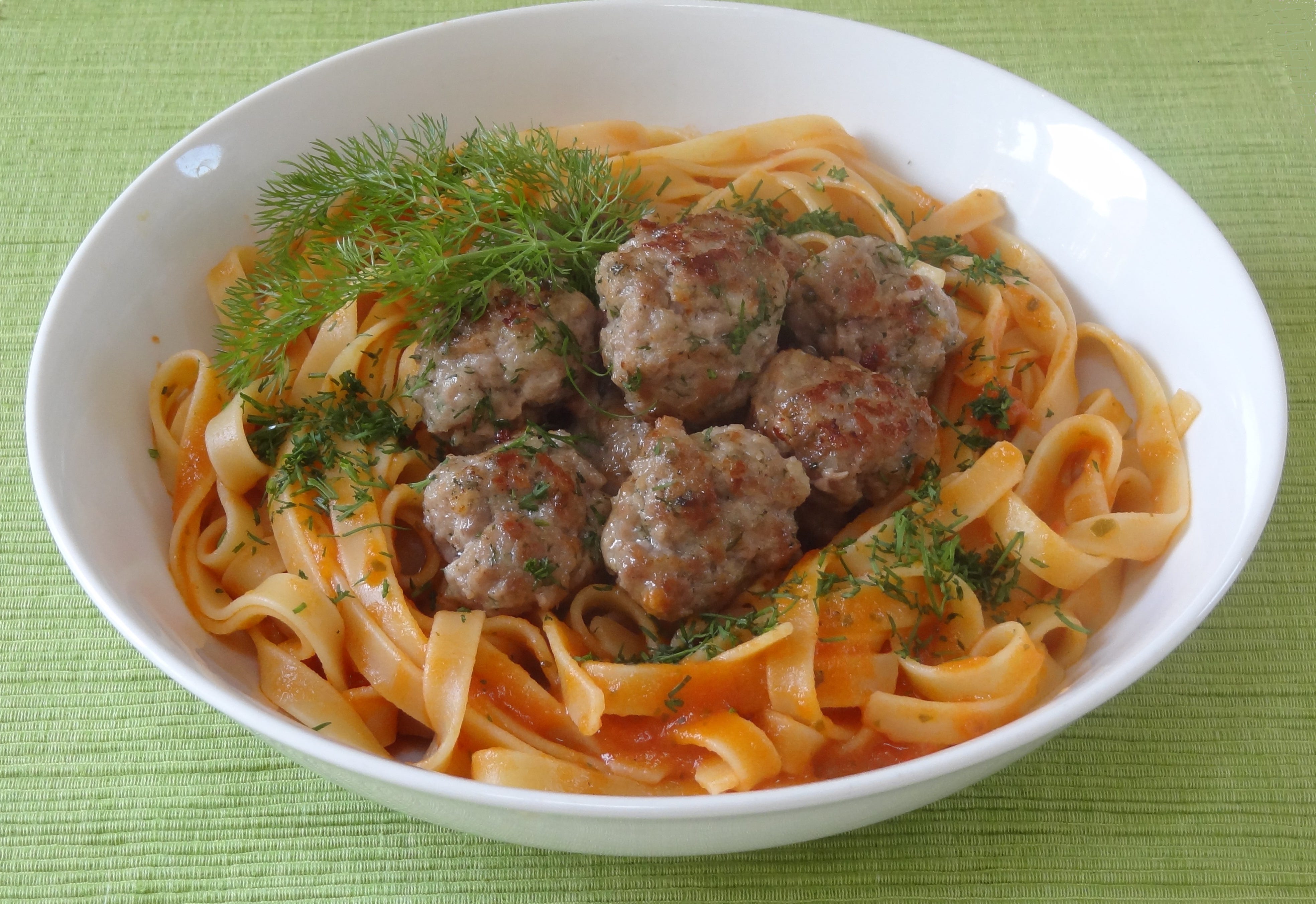
If you want to cook with them, however, try cutting the bulb into quarters and roasting them. In Italy, fennel is often paired with pork, so here’s a recipe for Fennel and Sausage Meatballs. Or you could just make up your own dish!
Fennel and Sausage Meatballs
This makes a tasty alternative to using beef for your meatballs. Serve them with spaghetti or tagliatelle and a generous helping of satisfying, home-made, tomato sauce.
Ingredients
500 g good quality pork sausage meat (or use skinned sausages)
1 small fennel bulb, finely chopped
Pinch of crushed fennel seeds
Oil for frying
Method
Put the sausage meat in a medium sized bowl and mix in the chopped fennel and crushed seeds.
Shape the mixture into small balls between the palms of your hands – you should aim for about 24 balls.
Heat the oil in a frying pan and cook the meatballs, turning them occasionally, until they are golden brown and cooked all the way through.
Serve with pasta and tomato sauce.
Here are some more …
Jobs for July
Keep on top of weeds before they have a chance to establish.
Cut back early summer-flowering perennials, such as hardy geraniums and delphiniums, after they have flowered – you will get a second flush.
Sow biennials to flower next year. These include foxgloves, honesty, and wallflowers.
Pick the last of your rhubarb. Also remove any flower spikes that you see, cutting them right down at the base of the plant.
Also keep harvesting courgettes regularly otherwise you’ll end up with marrows.
If you grow strawberries, peg down any runners into pots of compost to get new plants for free.
Continue to sow small batches of fast-maturing salad leaves, and radishes every few weeks.
And finally, here’s a just-for-fun
Quiz
1. Which flower’s name comes from the Ancient Greek word for star?
2. In Floriography, or the language of flowers, what flower can mean constancy and devotion, but can also mean distrust? (Check out July, Episode 1 for the answer!)
3. Which flower bulb was once more costly than gold?
4. William Wordsworth’s poem ‘I Wandered Lonely as a Cloud’ features what flower?
5. What herb gave the capital of Madeira its name?
6. What flower does a traditional pot pourri always contain?
(Answers below)
Picture credits: Rue, Tansy, Fennel - Pixabay; All others - my own copyright.
Quiz answers: 1. Aster, 2. Lavender 3. Tulip 4. Daffodil 5. Fennel 6. Rose